Prove the deployment before launch
Model serving is declarative and fail-closed. The deployment is rejected unless its declared context, concurrency, and memory shape fit the hardware budget.
CrunchAtlas: AtlasCyber & PurpleHaze
Current work · 2025–
I build the systems that keep long-running security agents bounded, observable, and useful on local hardware. I also built PurpleHaze end to end.
This case study describes system boundaries and engineering mechanisms. It omits customer data, proprietary detection logic, exact offensive procedures, private prompts, and private source code.
01 · Operating constraint
AtlasCyber has to run across cloud, on-premises, and air-gapped environments. That turns GPU capacity, long evidence sets, process failure, and provenance into product constraints—not infrastructure trivia.
02 · AtlasCyber
I built the serving, work-admission, execution, and agent-runtime layers as one operating system for AI-heavy security work. Each boundary exists because a worker count, a prompt, or a happy-path process tree is not a reliability strategy.
Model serving is declarative and fail-closed. The deployment is rejected unless its declared context, concurrency, and memory shape fit the hardware budget.
Postgres claims AI work under a shared token-domain budget, so task shape—not an arbitrary process count—determines whether scarce local inference capacity is available.
Workers, supervisors, child processes, streaming events, and a sweeper preserve an observable lifecycle through cancellation, crashes, process death, and abandoned work.
Exact token accounting, tool-result eviction, compaction, parse recovery, and output-cap recovery keep long-running domain agents inside explicit operating limits.
Domain agents construct models through one boundary, while per-request serving ceilings remain separate from per-task context budgets. Generic middleware owns context policy; report and security semantics stay in their domain layers.
Per-run tool containers are read-only, network-disabled, resource bounded, and self-reaping. I do not describe that as perfect tenant isolation: narrowing the current read-only media aperture remains a separate security boundary.
03 · Product proof
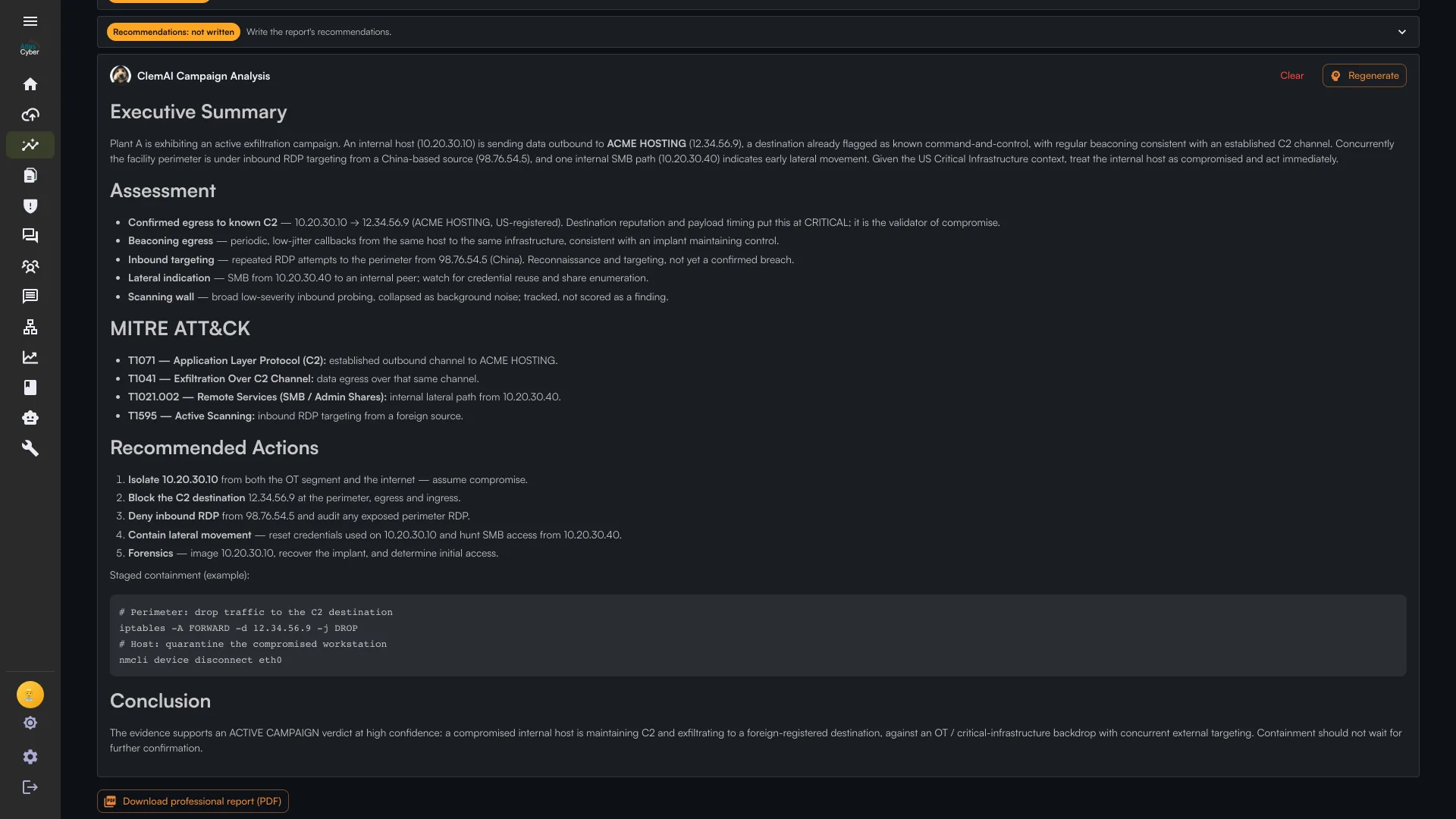
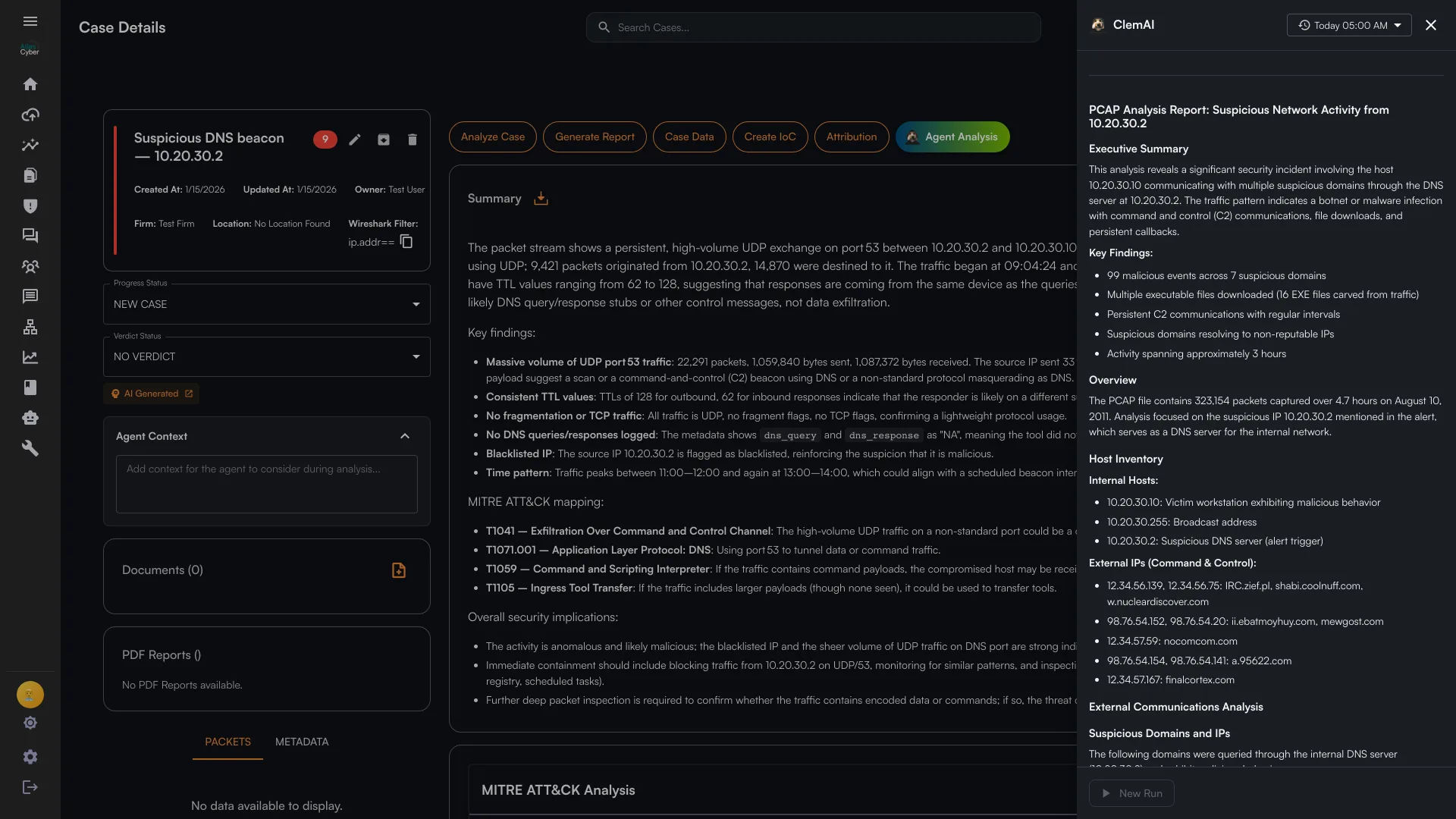
Public marketing views show the boundary I can expose: evidence-backed assessment and an agent-generated report, not customer data or internal detection logic.
04 · PurpleHaze
PurpleHaze connected a local model to controlled offensive workflows while preserving the live execution state and report contracts the model could not be trusted to remember or invent.
Workflow and scan steps were chained into one controlled engagement rather than exposed as disconnected tools.
Offensive-session state survived long runs and context compaction, preserving the execution state the model could not safely reconstruct.
Tool execution and workflow state remained inspectable across the engagement instead of disappearing into an opaque chat transcript.
OWASP, NIST, executive, and supporting report structures were validated before generating final report artifacts.
05 · Delivery and edge
Operational ownership
I own AtlasCyber's AWS footprint across GovCloud and commercial partitions: compute, object storage, IAM, VPC networking, content delivery, and the reverse-proxy and tunnel fleet that reaches deployed environments.
Completed rewrite foundation
I rewrote the AtlasCyber edge sensor around a headless Rust daemon: BPF-filtered capture and atomic rotation, a persistent SQLite WAL upload queue, bounded retry, storage-pressure guards, machine-bound encrypted credentials, an authenticated loopback API, hardened systemd delivery, and Linux package/service smoke coverage. The UI is optional, so capture does not depend on its lifecycle.
This is a stability-oriented foundation with deliberate legacy parity still deferred.
Where it landed